

The paperwork for hiring a student engineer in India is genuinely lighter than most US founders assume — you almost certainly owe no 1099 and no withholding. It is also asymmetrically punishing in two specific places: skip the W-8BEN and you are expected to presume the payee is a US person and apply 24% backup withholding on all payments, and reuse your US contractor template and you may not own the code you paid for. Neither problem costs anything to prevent. Both are expensive to discover eighteen months later during diligence.
Key takeaways
- No Form 1099-NEC is generally required for a contractor performing all services outside the US — but a signed W-8BEN must be on file before the first payment.
- Indian copyright law does not assume work-for-hire: without a written, signed assignment the contractor normally keeps the copyright.
- Classification turns on how the person actually works day to day — control, integration, economic dependence — not on what the agreement calls them.
- Cross-border hiring is not primarily a cost play: among nearly 100 heavily funded young startups, software developers make up 28% of the cross-border workforce.
One framing note: this is a practitioner’s map of where the sharp edges are, not legal or tax advice. Every figure below is sourced, but your fact pattern is yours — an hour with a cross-border employment lawyer before a long engagement is cheap insurance.
The tax side is simpler than you think
The test is where the work is performed, not where the person holds citizenship. A student in Kanpur writing code in Kanpur is generating foreign-source income, which is why the 1099-NEC obligation — triggered when you pay $600 or more to a US person, or for services performed in the US — does not attach. What replaces it is documentation. Form W-8BEN establishes that the payee is a foreign person and the beneficial owner of the income, must be provided before income is paid or credited, and generally remains in effect until the last day of the third succeeding calendar year unless circumstances change. Individuals file W-8BEN; if your contractor invoices through a company, that entity files W-8BEN-E instead.
Two operational details matter more than the forms. Collect it before the first invoice is paid, not at year end — the backup withholding presumption is what bites otherwise. And state explicitly in the agreement that all services will be performed outside the United States; that single sentence is what makes the file coherent if anyone ever reads it. The mirror-image mechanics on the student’s side are covered in our guide to getting paid in USD by a US startup.
The IP clause your US template does not have
This is the one that surprises people, and it is the one that shows up in diligence. US founders carry an implicit assumption that commissioned work belongs to the commissioner. Indian law does not work that way for contractors. Under Section 17(c) of the Copyright Act, 1957, work created by an employee in the course of employment vests in the employer — but for an independent contractor the author normally retains the copyright unless there is a valid written assignment, and Sections 18 and 19 require that the assignment be in writing, signed by the assignor, and specify the rights assigned, the period and the territorial area. Without it you are left with something closer to an implied licence. Section 57 also preserves the author’s moral rights regardless of who holds the economic ones, which is not usually a commercial problem but is worth knowing exists.
The fix is one paragraph: a present assignment of all rights in the deliverables, worldwide, for the full term, signed by the individual — not a US-style work-for-hire recital, which does the wrong work in the wrong jurisdiction. Get it signed before the first commit lands, not before the first funding round.
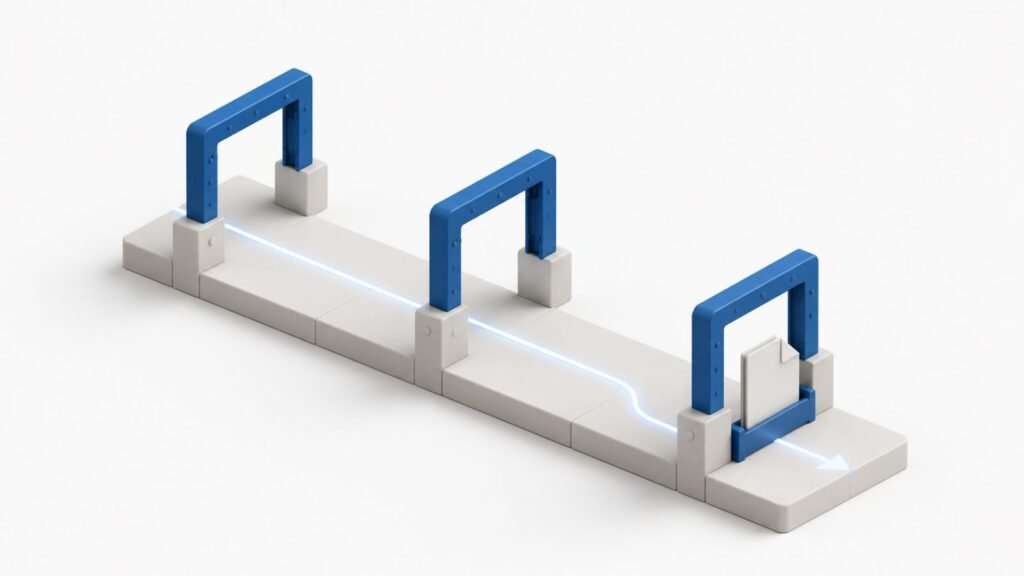
Classification: what the label cannot fix
Indian authorities look at substance. The practical tests are control (who directs how, when and where the work is done), integration (is the person part of your organisation or an outside service), economic dependence (are you their sole or dominant client over a long period), plus exclusivity, who supplies the tools, and whether personal performance is mandatory. L&E Global’s mitigation guidance is blunt about the shape to aim for: contractors should not be engaged in perennial activity that is core to the business, control and supervision should be minimal, and they should not be subjected to the leave, holiday, working-time and benefit policies that apply to permanent staff.
The downside if a relationship is later recharacterised is layered: unpaid provident fund at 12% employer plus 12% employee, ESI at 3.25% employer and 0.75% employee where monthly wages are at or below roughly ₹21,000, gratuity where service exceeds five years, plus interest and damages — and separately, a foreign company found to have a permanent establishment in India can be taxed on the profits attributable to it at a 35% base rate, roughly 36% to 38% effective once surcharge and cess are added, with permanent establishment defined in the applicable double-taxation treaty, typically Article 5. The triggers are habitual contract-concluding authority or a fixed place at your disposal.
Read that list and the low-risk shape becomes obvious rather than scary. A part-time, fixed-scope, few-month engagement with a student who has coursework, no authority to bind you, no dedicated desk and no exclusivity is roughly the furthest thing from an employment relationship you can construct. It is also, conveniently, the shape that works best operationally — which is why we lay it out as a six-week work trial.
The setup checklist
- Collect a signed W-8BEN before the first payment. Individuals file W-8BEN, entities W-8BEN-E. Diary the expiry — end of the third succeeding calendar year.
- State that all services are performed outside the United States. One sentence in the agreement; it is what makes the no-1099, no-withholding position legible.
- Add a present, written, signed IP assignment. Worldwide, full term, specifying the rights — drafted for Indian law, not lifted from your US template.
- Scope by deliverable, not by hours in a chair. Fixed milestones and a fixed end date. Set the rate yourself and put it in writing; there is no platform band to match.
- Keep supervision light and asynchronous. Review pull requests, do not set shift timings. This is simultaneously the compliance-safe posture and the one that works across a 10.5-hour offset.
- Pay on invoice, on a schedule, in USD. Ask them to invoice; pay within a stated window. Late payment is the single fastest way to lose a good student to a competitor.
- Verify identity separately from ability. Institute email confirmation tied to the GitHub account closes the impersonation gap that cross-border hiring otherwise leaves open.
- Take advice before you extend. A six-week trial and a two-year full-time arrangement are different legal animals. Revisit the structure at the point of conversion, not after.
Why this is worth the forty minutes
Because the talent argument has already been settled by companies larger than yours. Deel’s 2025 State of Global Hiring Report, drawn from more than one million workers across 37,000-plus companies in 150-plus countries, found that among nearly 100 startups founded between 2020 and 2025 that raised over $100M, software developers made up 28% of the cross-border workforce — and that cross-border hiring overwhelmingly targets high-income countries, shattering the myth that international hiring is primarily about cost-cutting. The report also notes USD appearing in five of the ten most common country-currency payment combinations globally. The funded cohort is hiring across borders for capability. The paperwork above is the entire price of admission for a seven-person team doing the same thing.
What is left is the hard part: finding the right student. That is what Tierones exists for — an Tier-1-only network of verified second-year developers at IITs, NITs and IIITs, where Tierones profile reads merged commits, code reviews and shipped projects rather than self-reported claims, and every profile is tied to a confirmed institute email. Free while the network grows.
FAQ
Do we need to issue a 1099 to a contractor in India?
Generally no. A US business is not required to issue Form 1099-NEC to a foreign contractor performing all services outside the United States, because the income is foreign-source. What you do need is a signed Form W-8BEN on file before the first payment — without a valid one you are expected to presume the payee is a US person and apply 24% backup withholding.
Does our standard contractor agreement transfer ownership of the code?
Not reliably, if the work is done in India. Section 17(c) vests employee work in the employer, but an independent contractor normally keeps copyright unless there is a valid written assignment. Sections 18 and 19 require it to be in writing, signed by the assignor, and to specify the rights, the duration and the territory. A US work-for-hire recital does not achieve this.
Could hiring a student in India create tax exposure for our company?
It is a real but manageable risk that scales with duration and authority. A foreign company found to have a permanent establishment in India can be taxed on the attributable profits at a 35% base rate, roughly 36–38% effective with surcharge and cess, with permanent establishment defined in the applicable treaty, typically Article 5. A short, part-time, project-scoped engagement with no contracting authority and no dedicated office sits well away from the triggers — but take advice before anything long-term.
Hiring remote engineering help this quarter? Tell us what you need — we’ll show you proof, not CVs.